What if integrity failures in nature markets are actually coordination failures?
@matnapo for Unsplash
As nature markets become more complex, many delivery risks no longer come from bad intentions or weak science, but from poor coordination between actors operating with different incentives, timelines and understandings of reality.
Coordination is a core aspect of large, multi-stakeholder operations
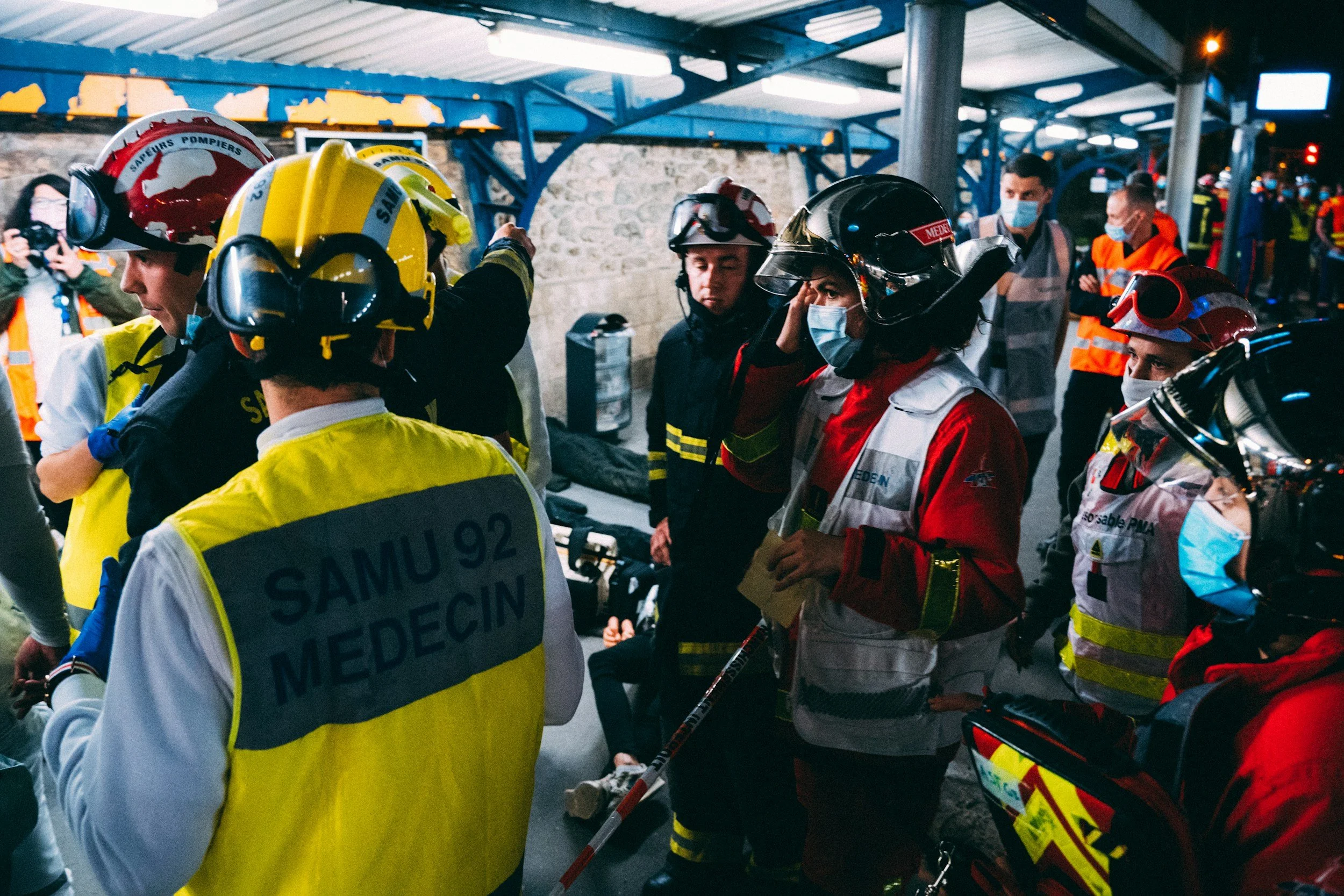
Last week I did my first duty as an event first aider with St Andrews First Aid, an over 100-year old responder charity in Scotland. It was also the first football match I attended and there were about 5 different responder teams on site.
Before the event even started, the team had a briefing. We went through radio channels, escalation procedures, roles, likely risks and coverage areas. Afterwards, there was a debrief. Nothing unusual. Emergency services do this. Hospitals do this. Military teams do this. Large construction projects do this. Why?
Because when multiple specialists work together under pressure and uncertainty, coordination is not treated as a soft skill. It is an essential aspect that makes the operation work. And it made me think about something I keep seeing in carbon and biodiversity markets.
The integrity concept in nature markets encompasses more than just safeguards and ethical values
We spend a lot of time talking about ‘integrity’. Usually in the context of safeguards, standards, methodologies, biodiversity, community engagement or scientific rigour. All important, for sure. But is that all we are talking about when we use the word integrity? We just to have look at the community related requirements in carbon/nature standards or the the safeguards enquiries made by rating agencies. One thing is becoming clear to me:
The Integrity in high-integrity carbon markets is about two different things:
One part is safeguards and ethical commitments.
The other is whether the whole operation is actually set up to function properly over time.
That second part often gets less attention in this still immature sector. And yet many project problems seem to start there. Not necessarily because people are incompetent and surely not because they are acting in bad faith as a rule of thumb. But because multiple actors are making decisions from very different understandings of reality.
Investors, corporates, developers, standards bodies, technical teams, technology providers and communities are often operating with different assumptions, different timelines and different definitions of success.
That creates friction, a friction that is not that obvious at first. And the consequences are often felt much alter and attributed to other causes. They can show up as delays, strained partnerships, pressure on delivery teams, reporting problems, unrealistic expectations on communities or projects that become operationally fragile.
Many project delivery issues are about expectation management and alignment of the value chain elements
I recently moderated a panel on integrity in carbon markets at the Corporate Investment in Forestry and Biodiversity event in Frankfur, facilitating a discussion between Julian Ekelhof of Forliance, Willem Valkenburg of Landlife (both project developers) and Maddy Agnew of the standard Isometric. One point that came up repeatedly was the gap between expectations from commitments and methodology, and delivery on the ground Projects can look strong on paper and still run into serious operational challenges later on. One developer made a very honest point that overpromising to attract investors or buyers can later create unrealistic expectations for local stakeholders. Another highlighted how changing methodologies can strengthen trust with buyers while creating instability on the ground that then needs to be repaired.
Yes, those are communication problems. Strategic communications problems where expectations are not managed effectively at either end of the value chain. But they are also coordination problems. And coordination problems eventually become delivery problems.
I saw versions of this repeatedly in recent discussions around nature markets:
Investors asking perfectly reasonable questions about timelines, risk and use of capital, while developers answered mainly from a technical or impact perspective.
Corporate sustainability teams wanting to engage with nature but struggling to translate frameworks like TNFD into something operationally manageable.
Technology providers talking about efficiency and capability, while audiences immediately worried about governance, ethics and trust.
Developers trying to satisfy standards, investors, buyers and communities simultaneously while methodologies continue evolving underneath them.
Meanwhile, a lot of the translation work between these worlds still happens informally, reactively or not at all. And this matters because the sector is becoming more operationally complex very quickly. More standards. More scrutiny. More reporting layers. More technology. More actors. More pressure to prove impact.
We are entering a phase where operational coherence may become just as important as technical sophistication.
In more mature industries, a lot of this coordination infrastructure is already embedded into how systems function. Take a cocoa supply chain. It is also international, commercially pressured and exposed to sustainability issues. But there is usually much more shared understanding around incentives, operational realities, pricing structures and roles across the chain. It has probably taken a while to get there, plus these supply chains most likely grew at a more normal, organic pace - when life was moving at a speed that human brains can keep up with!
Complexity is increasing faster than coordination
Nature markets are younger. Part of the challenge is simply immaturity. Standards and methodologies are still evolving, and the economics are still being worked out. But another part is that this sector sits at the intersection of finance, ecology, technology, regulation and community engagement. Those worlds do not naturally speak the same language. And as the sector scales, the coordination burden increases.
What do we do about it?
First, we probably need to recognise coordination as a core infrastructure element rather than a secondary support function. The sector has invested heavily in methodologies, MRV, technology and standards. Rightly so. But many organisations still resource technical work and communications separately, while underinvesting in the layer that keeps different actors aligned operationally.
Second, we need to get more specific about where coordination pressure actually sits.
For example:
between investors and developers around timelines and risk
between buyers and field realities
between standards and implementation capacity
between technology providers and trust sensitive audiences
between corporate reporting ambitions and operational realities on the ground
3. Third, we need to stop treating expectation setting and information sharing as soft, ‘safeguard’ exercises. It’s an operational necessity.
Across the supply chain, we need to get better at managing expectations and connecting to the operational reality of projects (which are our product)
As per compliance, communities increasingly receive more structured information around risks, trade offs and expected benefits through safeguards processes such as FPIC. And rightly so. But upstream, investors, buyers and delivery teams are often still operating with very different understandings of what projects realistically involve operationally. Overall, this is an operational risk.
This eventually creates operational pressure throughout the system. Which brings me to the last point about the direction we might want to take for solutions.
As a sector, we might want to shine the light a little bit more on the importance of operational matters and habits across the sectors. The boring stuff - processes, information flow etc. Yes, a few AI providers and data companies are increasingly taking an infrastructure approach, so we are getting there. But this trend needs to continue to include the operational realities on the ground (ie the actual product!) and how it links to carbon trading, nature investment and so forth further upstream. Important:
Earlier expectation setting.
Clearer ownership of risk.
More explicit discussions around trade offs.
Better feedback loops between field realities and corporate expectations.
Operational input before commitments are publicly communicated.
More debriefing and learning after things go wrong.
In other sectors, these are normal parts of running complex operations. Not because failure is expected, but because complexity is.
Nature markets are no longer a niche space held together mainly by vision and goodwill. Increasingly, they are becoming large, multi actor operational systems expected to deliver long term environmental, social and financial outcomes under real world conditions.
And in systems like that, coordination is not fluff. It is part of the delivery infrastructure.
Questions you can ask early on
If you are building, funding or scaling nature based programmes, it may be worth asking a few uncomfortable questions early on:
Are different actors making decisions from the same understanding of reality?
Are trade offs explicit?
Are timelines and operational constraints understood across the chain?
Are we investing enough in the coordination layer before problems emerge downstream?
Because many integrity failures may start much earlier than we think. Not in the field. But in assumptions, incentives and expectations that were never properly aligned in the first place.
If this sounds familiar from projects or partnerships you are involved in, feel free to reach out. Or send this to someone currently wrestling with these challenges.
