Carbon Is a Means, Not an End Goal
Carbon proved land could be valued for more than timber. The real work now is taking a proper look at what all of an estate's ecosystem services are actually worth, financially, for nature, and for the people who depend on it, not settling for carbon as the whole story.
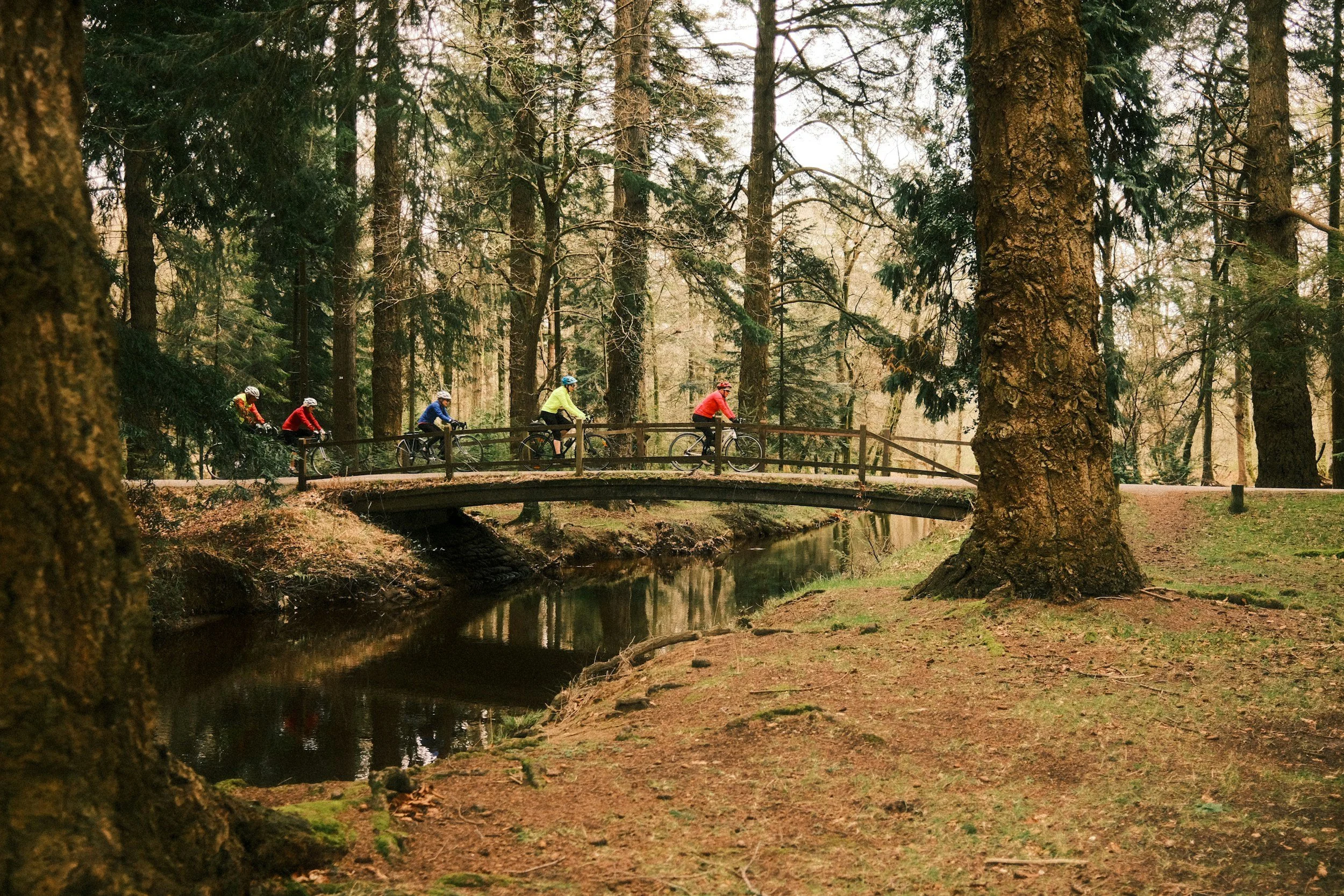
A recent conversation with woodland manager Cheryl Lundberg got me thinking hard about something. Cheryl works for Robinson Forestry, a small business in England, and loves her job. We first met years ago at a women-in-forestry gathering in Edinburgh, back when I was working at the Confederation of Forest Industries, and reconnected properly this year. She's one of those people who got into forestry for the people in it, not to avoid them, which is apparently the opposite of how a lot of people end up in this sector, and probably why we got on so well from the start.
That conversation, with someone whose actual job is building land management plans for owners, got me thinking about how nature-positive land management actually works as a business: not as a carbon project or a biodiversity project, but as a whole place that employs people, has costs, produces things, and somehow has to pay for itself. That sounds obvious. But in the Natural Capital world that's grown so quickly over the last few years, it's rarely the starting point, and it's worth asking, as Cheryl put it, what the actual outcomes are once you strip the trend away.
Multipurpose forestry in fairy tales
There's a dilemma I keep coming back to. We all have this vision of a beautiful estate doing lots of different things at once: looking lovely, good for nature, good for people, basically a nice working example of a circular economy. But taking lowland estates in England as the example, there's often a real gap between that vision and actually getting revenue out of it, particularly from biodiversity uplift, mostly down to scale and what there's the incentive to do at that scale. Bigger Scottish estates often have decent timber income to lean on, simply because of the scale they're operating at, but even that can sit in tension with the nature-near, people-pleasing landscape people picture.
When carbon and biodiversity credits arrived, they did something essential: they got us moving toward that fairy-tale vision of multipurpose forestry, even if by accident. They forced people to re-examine single-purpose, timber-focused land management habits that weren't always great for nature, and they gave real momentum to the harder task of deriving value from several of a piece of land's ecosystem services at once, not all of them, and not everywhere, but more than one, depending on what the land could actually support. That mattered regardless of how carbon itself went on to perform. It's the impulse this whole piece owes something to.
But there is something both Cheryl and I landed on: the carbon side has ended up too centre stage. Carbon credits are essentially a forest product too, just an intangible one, and producing them, if that's even the right word, comes with none of the immediate, tangible reward a product you can actually touch would give you. It's resource-heavy, compliance-heavy, and doesn't always pay for its keep once you look at it from the landowner's side. And once you look at it from the whole estate rather than the carbon project alone, some different questions show up.
What's the actual product I'm getting out of this, and what does it cost me, not just directly but in management time, monitoring, certification, and the operational changes it forces? Am I duplicating work I'm already doing somewhere else on the estate? And does this actually make the estate work better as a whole, or does it just sit alongside everything else with its own spreadsheet?
Carbon takes a seat, not the stage
Increasingly, carbon is losing its centre stage, finding its place as one piece of the puzzle: one element of how you value land for its different ecosystem services, rather than the main product with all the workload attached.
This isn't just a hunch. UK-based Craig Sillars, who's restoring former rubber plantations into mixed agroforestry farms in Liberia, is one of the people who holds this view most firmly: that a solid, integrated combination of commercial activities has to hold the feasibility and keep the focus on outcomes, with carbon sitting on top of that, not the reason any of it exists. He's got that same grounded, joined-up way of thinking running through everything he does, looking at the whole system rather than optimising one piece of it. That doesn't make him any less invested in the people and biodiversity side of it, if anything it's clearly the part of the work he loves most.
“The real question is how carbon works as part of a portfolio, not as the headline act.”
And it's not just landowners who find it a hard sell when carbon has to carry the whole story; investors do too, for the same reason. Carbon projects usually already contain the real substance, the impact work, the social programmes that had to launch anyway, but everything gets packaged and sold around carbon instead of around the activities themselves. Carbon should be doing something much smaller: sitting in the background as the methodology you use to prove compliance on one revenue stream, not the story the whole project has to justify itself through. If anything, compliance needs to bend toward the business model, not the other way round.
This is also the disconnect that gets under my skin, and it's the same thing Cheryl was pointing at from her side of it too: carbon's complexity is dangerous less because of the compliance itself and more because it's so easy to lose sight of whether the activities are actually earning their keep, financially, environmentally, socially, whatever the real objectives are, while everyone's busy managing the process. The carbon or biodiversity layer ends up built in isolation, by people whose whole job is that one layer, without anyone stepping back to ask how it connects to the rest of the estate. It's exactly the kind of gap I find myself wanting to help fix.
None of that happens by itself, though. Getting to a genuinely multipurpose estate takes vision, and vision on its own doesn't get you there either, it takes leadership, and it takes managing the change that comes with it.
This is a people problem before it's a land problem
We talk a lot about changing how land is managed. We talk much less about changing the people and organisations who manage it. And this matters a lot to unlock efficient delivery of modern multi-purpose land management that also caters for Natural Capital.
Estate staff are often long-standing, settled in their ways, good at what they do. Then the strategy shifts and suddenly they're expected to broaden out: work with ecologists, monitor habitats, host visitors, pick up new skills, hold new relationships. They’re also suddenly expected to care about different things. That’s changing their vision, which is not a small ask! Beyond the individual staff member, we are looking at organisational change here, and well-resourced companies spend a lot of money getting that right. We can't expect people who steward land to just start behaving differently because a strategy document says so. Human nature doesn't stop at the farm gate.
Talking to Cheryl, she mentioned Doddington Hall and Packington Estate in England as two great examples of integrated land management with multiple revenue streams from different land-based products. Doddington's biodiversity net gain work sits inside a much wider “Wilder Doddington” offer of trails and wildlife experiences alongside the hall itself, so the same restored habitat earns compliance revenue from developers and pulls in visitors at the same time. Packington is rewilding roughly a third of the estate while running regenerative grazing on the rest, then folding camping, wildlife safaris and direct meat sales in around both, different zones doing different jobs, but coordinated as one plan rather than run as separate ventures. In both cases, the ecological work isn't sitting behind its own fence with its own accounting, it's stitched into whatever else the estate already does. What both also seem to share is leadership: someone with a vision for the whole estate who then builds the in-house capacity to carry it out, and brings existing staff with them rather than around them.
Even with that leadership, the financials are hard. Without it, the economics of a diversified, ecosystem-services-inclusive estate often just aren't convincing enough, and the road there is too long for someone without real drive behind them.
Then there's the harder case: small estates with older owners who don't have the appetite to reinvent the place. Fair enough, not everyone should have to. But if that's the situation, it might be worth leasing or selling the land to someone who does have the vision and a workable plan. There are plenty of people out there who'd take that on. I'd count myself among them.
Product-market fit for a multipurpose forest
There's an old rule in business that's so basic most industries take it for granted: follow the market. Land management, oddly, still doesn't always start there.
“Here's where I think the more useful question sits. Not ‘how do I make money from biodiversity’, but ‘what can this land actually offer that someone needs right now’.”
Sometimes the answer is a biodiversity unit or a carbon credit. Often it isn't. Most of the country is carrying some version of digital fatigue and a disconnect from land, and that's turning into real demand: people want to spend time on it, not just look at it. Workshops in rural skills, sheepdog demos (I am super keen on that one and definitely willing to pay), watching the shearing, falconry, learning about cheese manufacturing. Almost anything actually happening on the land is something people will pay to be part of.
None of this is actually new. If anything, it's closer to how people related to land before farming and leisure got split into separate industries, when you lived with land rather than alongside a commodified version of it. What's different now is that estates have to design that relationship back in deliberately, as a business, rather than it simply being how things were.
I went looking for something like this once, a day spent on wood carving or bushcraft skills, and found there's no shortage of it: day courses for around £100, low input for whoever's running them, and clearly enough demand to keep them going. Plenty of people, mostly younger, have the vision and are hungry to get their hands on land and build something around it, or simply to pay for the experience of it.
None of this is hugely scalable, and it doesn't need to be. A small estate was never trying to compete with big infrastructure investment in the first place, it's trying to find enough of these fit-for-purpose activities that they add up to something real. A bigger estate can lean harder into the carbon and forestry side, more timber, more carbon forestry, because it's got the land base to make that pay at scale. It's not that one model is right and the other's wrong, it's that the right mix depends on what you're actually working with. Depending on the circumstances, different pieces of that portfolio step into the foreground and carry the business plan, while the rest sit alongside contributing what they can, different ecosystem services end up getting monetised, and pulling their financial weight, in different ways.
Last year I stayed with my kids at Shepherd's Loch in Aberdeenshire. It's a working farm like plenty of others in the area. But around it, the owners built this lovely little cluster of cabins with a feel closer to African safari eco-lodges than a typical UK farm stay: low input, low profile, high impact. There was barely any supervision. You were basically allowed to just live on the land for a couple of days. That's the range that exists between doing nothing with a piece of land and turning it into a theme park.
And this is where biodiversity earns its place back in the story, not as the product, but as the thing that makes the product better. Land that's ecologically richer is also a nicer place for people to be. That doesn't mean planting some trees automatically creates tourism revenue, there's a piece of translation work in between, turning ecological value into something visitors can actually see, learn from or take part in. But if you get that translation right, the recreational value becomes your most direct and tangible income stream, and the carbon or biodiversity credit sits on top of it rather than carrying the whole thing.
If you've got timber, keep the timber. Build something with it on the ground: cabins, workshop spaces, whatever fits, and get the people who visit involved in making it. That's where the value actually is.
The real gap isn't another specialist
Working out what the land can actually offer, as in the last section, is the easier half of this. Holding all of it together as one estate, instead of a handful of separate side ventures each running to its own logic, is the harder one. Vision and leadership get you a strategy. What actually delivers it is someone who can look across forestry, farming, ecology, finance, property and tourism at once, rather than optimising one piece in isolation, who treats stakeholder engagement as more than a formality, actually bringing in the people affected by each of those pieces rather than managing them through a decision that's already been made, and who can decide what the estate does itself, what it buys in, what it leases out, where a partnership makes more sense than doing it alone. It needs transition planning, a different cash-flow horizon than most estates are used to, and someone willing to bring the existing team through it, not just announce the new direction.
Why I'm suddenly talking to woodland and estate managers
After years working across forestry, biodiversity, carbon markets, nature tech, community engagement and project development, I want to get closer to the actual places all of that is meant to serve. None of this makes me a land manager, and I'm not pretending twenty years of adjacent experience closes that gap on its own. It's the pattern I keep running into on the delivery side of carbon and nature finance work, and it's a large part of why I'm trying to see this from the land up.
Tomorrow I'm driving five hours north to Reay Estate, where estate manager Ben Mardall has kindly offered to show me around. He's one of those managers with a real, diversified vision for the place, tourism, rewilding and commercial activities all held together rather than run separately. If anyone's actually cracked what this piece has been circling, it's probably someone like him, so I'm looking forward to seeing what these questions look like with mud on my boots instead of notes on my laptop. I'm doing a lot of listening at the moment.
Stefanie Kaiser
